
Joel S. Brown (USA) – Using Evolutionary Game Theory to Manage Evolving Resources, Pests and even Cancer
Abstract: Nature is not an art gallery, and species are not masterpiece paintings. They are ecologically and evolutionarily dynamic. Furthermore, nature plays games, evolutionary games that is. Organisms evolve strategies to better survive in their environment and to more successfully interact with conspecifics, competitors, and predators. For example, one can ask the almost Zen-like question: “Why is there wood?” The answer lies as the solution to an evolutionary arms race for height as woody plants strive for light. Human actions also exert selection forces. Humans can wittingly or unwittingly become part of nature’s games. When humans alter the ecologies of other species the wrong question to ask is “Will they evolve?” rather we should ask “How fast and into what will they evolve?” As humans alter the eco-evolutionary dynamics of other species – valuable and pesky ones alike – the game can and should become a Stackelberg evolutionary game where the manager or decision makers take the lead by anticipating and steering both the ecological and evolutionary dynamics of the managed species. I will introduce the G-function approach to evolutionary game theory (akin to adaptive dynamics) to examine modelling opportunities and applications in managing valuable resources (e.g., fisheries), agricultural pest species, antibiotic resistance, and even cancer. The evolution of therapy resistance by cancer cells explains most patient deaths. Novel evolutionary therapies have proven effective in several clinical trials of prostate cancer. In these clinical trials and others, mathematical models are leading the way towards “algorithms as drugs” (sensu Christopher Gregg) with the goal of rendering some currently incurable cancers as containable, and others as curable. For cancer and for evolving resources, pests and diseases evolutionary game theory can contribute to a resistance management plan.

Bio: Joel Brown is a Senior Member of Integrated Mathematical Oncology, Moffitt Cancer Center and Distinguished Professor Emeritus at the University of Illinois Chicago. He is known for integrating evolutionary game theory with ecological and resource modeling problems. Author of Evolutionary Game Theory, Natural Selection, and Darwinian Dynamics, he has developed influential models of consumer–resource interactions, invasive species dynamics, and ecological systems. His work demonstrates how evolutionary perspectives can enrich modeling and decision-making in natural resource systems and now cancer.
Lorien Pichegru (South Africa) – A decade of science-based conservation for African Penguins – lessons learnt
Abstract: African penguins are endemic to Southern Africa and their populations have dwindled to a mere 1% of their historical numbers, due to various threats over the past century. Recently, the collapse of the fish stocks they depend on accelerated their decline and called for the downgrade of their IUCN status to Critically Endangered, the only penguin species globally to face this level of threat. Experimental fishing exclusion zones around key penguin colonies were tested since 2008 to assess their benefits for the birds (the Island Closure Experiment – ICE), and in 2013 the African Penguin Biodiversity Management Plan (BMP) was gazetted to “halt the decline of the African penguin population (…)” within the five years of its implementation. Several working groups were created to discuss the ICE and to facilitate the implementation of the actions emanating from the BMP. Conservation actions included the provision of artificial nests, the rehabilitation of adults and chicks, or predator management, among others. Long-term monitoring were set in place to measure the impact of these actions, which were proven to have slowed the decline of the species. Inadequate management of competition with fisheries however prevented population recovery and called for more permanent fishing exclusions, which were declared in Court in 2025.
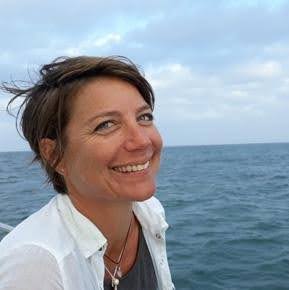
Bio: Lorien Pichegru is former Acting Director of Nelson Mandela University’s Institute for Coastal and Marine Research. She combines ecological modeling, long-term field studies, and policy engagement to protect African penguins and marine ecosystems. Her influential work has advanced natural resource management and shaped conservation policy, inspiring action in South Africa and internationally, and establishing her as a leading scientific voice for ocean sustainability and biodiversity protection.
Wisdom Akpalu (Ghana) – Modeling illegal behavior in small-scale capture fisheries in developing coastal countries
Abstract: Wild fish stocks provide substantial economic and social benefits to developing coastal countries, yet they are often managed under regulated open-access regimes, leading to overcapitalization and biological overfishing. In addition, some fishers adopt destructive fishing practices to increase their harvests, driving stocks further towards collapse. While certain violations—such as fishing in closed areas or exceeding catch limits—can be explained by fishers behaving as rational agents who maximize a short-term (one-period) expected utility function, other infractions involve longer-term strategic behavior. In particular, some fishers invest in destructive fishing gear to increase catch efficiency over time, continuing to do so until they are detected and punished. This latter form of illegal activity can be modeled as an investment decision under uncertainty, where returns persist until the offender is apprehended. This study develops both static and dynamic models of such behavior, incorporating time discounting, and presents empirical evidence based on small-scale fisheries in Ghana.
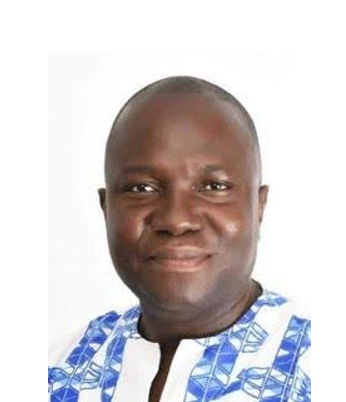
Bio: Wisdom Akpalu is a Professor of Economics at the Ghana Institute of Management and Public Administration and the director of Environment for Development in Ghana (EfD-Ghana). He applies economic and game-theoretic models to fisheries, climate, and environmental policy. His research has significantly shaped resource governance and contributed to the development of equitable approaches to resource management across Africa. His impactful policy research led to his appointment as Chair of the Governing Council of Ghana’s Fisheries Commission. As President of the board of directors of EfD Africa Hub, he promotes evidence-based solutions that bridge science and policy across the African continent.
Jill Slinger (Netherlands) – Modelling to support ecosystem-based water and coastal management

Bio: Jill Slinger is a Professor in Transdisciplinary Policy Development at Delft University of Technology in the Netherlands. She applies mathematical and simulation models to water governance, integrating science with participatory approaches to decision-making. Her work has informed management of estuaries, deltas, and river systems, advancing resilience and sustainability in complex socio-ecological environments through both academic research, community and policy engagement.
Emerging Scholar Award Plenary Session:
Our 2026 Emerging Scholar Award winners and runner-up will deliver talks in a plenary session at WCNRM 2026.
Charlotte Gerling (Winner)
Talk: Climate-ecological-economic modelling for a better future for biodiversity
Bio: Charlotte Gerling (Brandenburg University of Technology Cottbus–Senftenberg, Germany) is an emerging leader in quantitative environmental decision-making and winner of the WCNRM Best Student Talk (2018), recognised for her early-career impact and innovative contributions.
Frankie Cho (Winner)
Talk: Natural resource management strategies must be robust to uncertainties
Bio: Frankie Cho (Queensland University of Technology, Australia) is a resource modeller with multiple PNAS papers, R packages, and a strong early-career trajectory focused on rigorous, uncertainty-aware decision support.
Eric Djomo Nana (Runner-up)
Talk: Modeling behaviour-change of urban wild meat trade actors in Central Africa under different potential futures for sustainable wildlife management
Bio: Eric Djomo Nana serves as President of the Cameroon chapter of the Society for Conservation Biology, leads the Wildlife Conservation & Research Unit at IRAD, and has published extensively on forest biodiversity in Central Africa, with global collaborations including Oxford University.